
Introduction
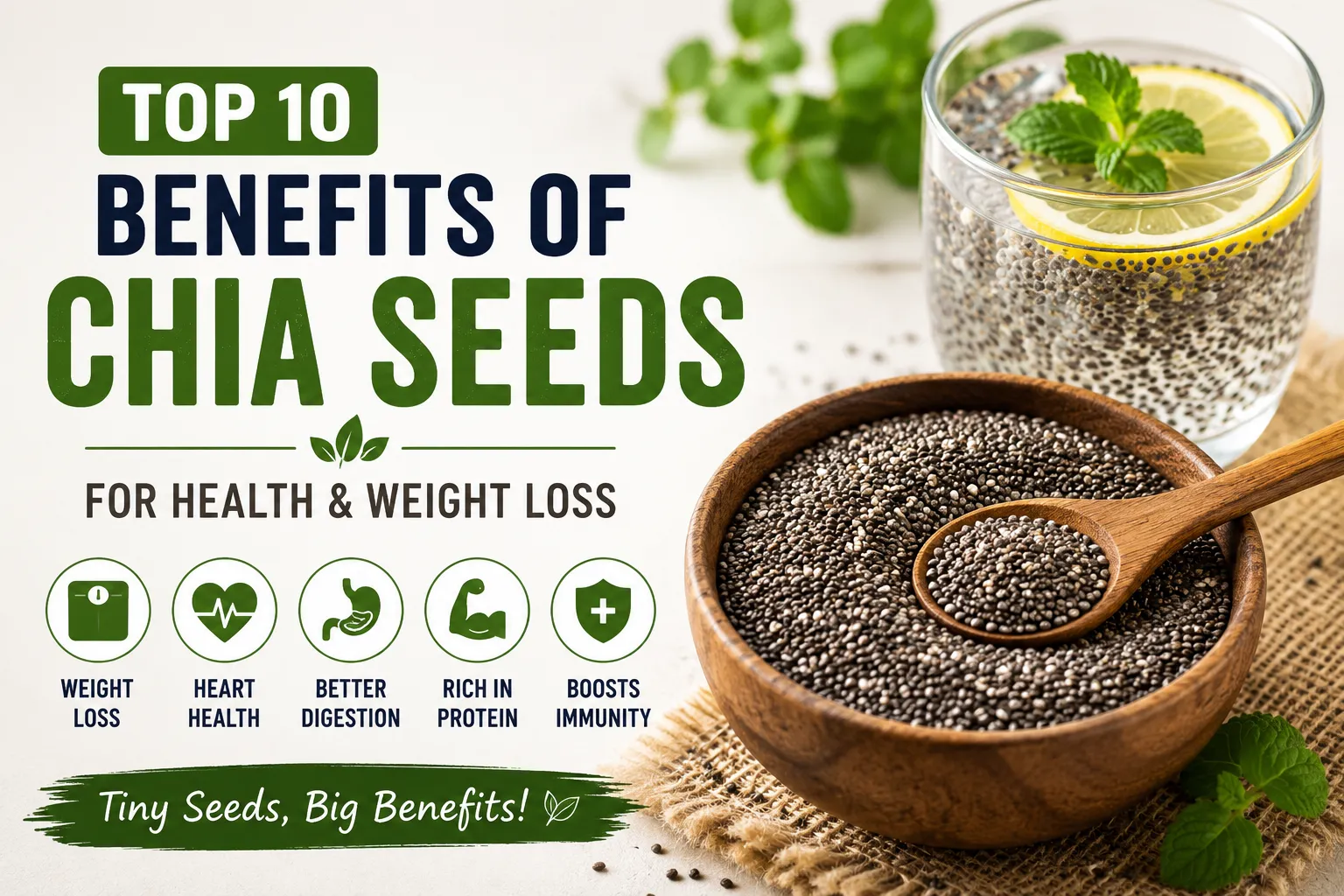
Chia seeds are among the most popular superfoods in the world. These tiny black seeds are packed with fiber, protein, antioxidants, and essential nutrients that support overall health. Whether your goal is weight loss, better digestion, or improved heart health, chia seeds can be a valuable addition to your daily diet.
In this article, we will explore the top benefits of chia seeds, how they help with weight loss, and the best ways to include them in your meals.
What Are Chia Seeds?
Chia seeds come from the plant Salvia hispanica, which is native to Central America. Despite their small size, they contain impressive amounts of fiber, protein, omega-3 fatty acids, vitamins, and minerals.
A single serving of chia seeds provides nutrients that can help improve overall health and support a balanced diet.
H2: 10 Benefits of Chia Seeds
1. Rich in Nutrients
Chia seeds contain fiber, protein, calcium, magnesium, phosphorus, and antioxidants. These nutrients help support various body functions and overall well-being.
2. Supports Weight Loss
The high fiber content helps you feel full for longer, reducing hunger and unnecessary snacking. This may help support healthy weight management.
3. Improves Digestion
Fiber promotes regular bowel movements and supports a healthy digestive system.
4. High in Antioxidants
Chia seeds contain antioxidants that help protect cells from damage caused by free radicals.
5. Supports Heart Health
Omega-3 fatty acids found in chia seeds may help support cardiovascular health and maintain healthy cholesterol levels.
6. Helps Maintain Healthy Blood Sugar Levels
The fiber in chia seeds may slow digestion and help reduce sudden blood sugar spikes.
7. Strengthens Bones
Chia seeds are a good source of calcium, magnesium, and phosphorus, which are important for strong bones.
8. Provides Plant-Based Protein
They are an excellent protein source for vegetarians and vegans.
9. Boosts Energy Levels
Many people add chia seeds to smoothies and breakfast meals for long-lasting energy throughout the day.
10. Supports Healthy Skin
The antioxidants and omega-3 fatty acids may help support healthy, glowing skin.
Benefits of Chia Seeds for Women
May support bone health
Helps improve digestion
Can aid healthy weight management
Provides important minerals such as calcium and magnesium
May support overall wellness during different life stages
Chia Seeds for Weight Loss
Chia seeds absorb water and expand in the stomach, helping you feel satisfied for longer periods. Combined with a balanced diet and regular exercise, chia seeds can be a helpful addition to a weight-loss plan.
Nutritional Value of Chia Seeds
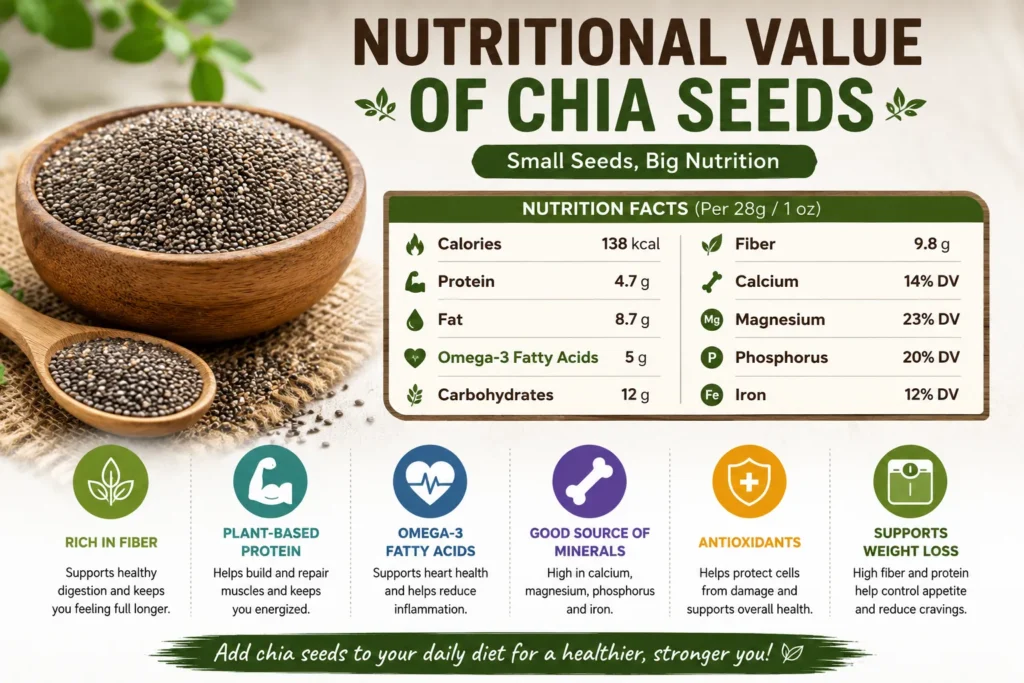
Chia seeds may be small, but they are packed with essential nutrients that support overall health. They are an excellent source of fiber, plant-based protein, healthy fats, vitamins, minerals, and antioxidants.
A 28-gram (1-ounce) serving of chia seeds typically provides:
| Nutrient | Amount |
|---|---|
| Calories | 138 |
| Protein | 4.7 g |
| Fat | 8.7 g |
| Omega-3 Fatty Acids | 5 g |
| Carbohydrates | 12 g |
| Fiber | 9.8 g |
| Calcium | 14% of Daily Value |
| Magnesium | 23% of Daily Value |
| Phosphorus | 20% of Daily Value |
One of the most impressive nutritional benefits of chia seeds is their high fiber content. Nearly 80% of their carbohydrate content comes from fiber, which helps promote digestive health, supports satiety, and may aid weight management.
Chia seeds are also rich in omega-3 fatty acids, which support heart health and help reduce inflammation. Additionally, they provide plant-based protein, making them an excellent choice for vegetarians and vegans.
The combination of protein, fiber, healthy fats, and important minerals makes chia seeds one of the most nutrient-dense foods you can include in a balanced diet.
Benefits of Chia Seeds in Water
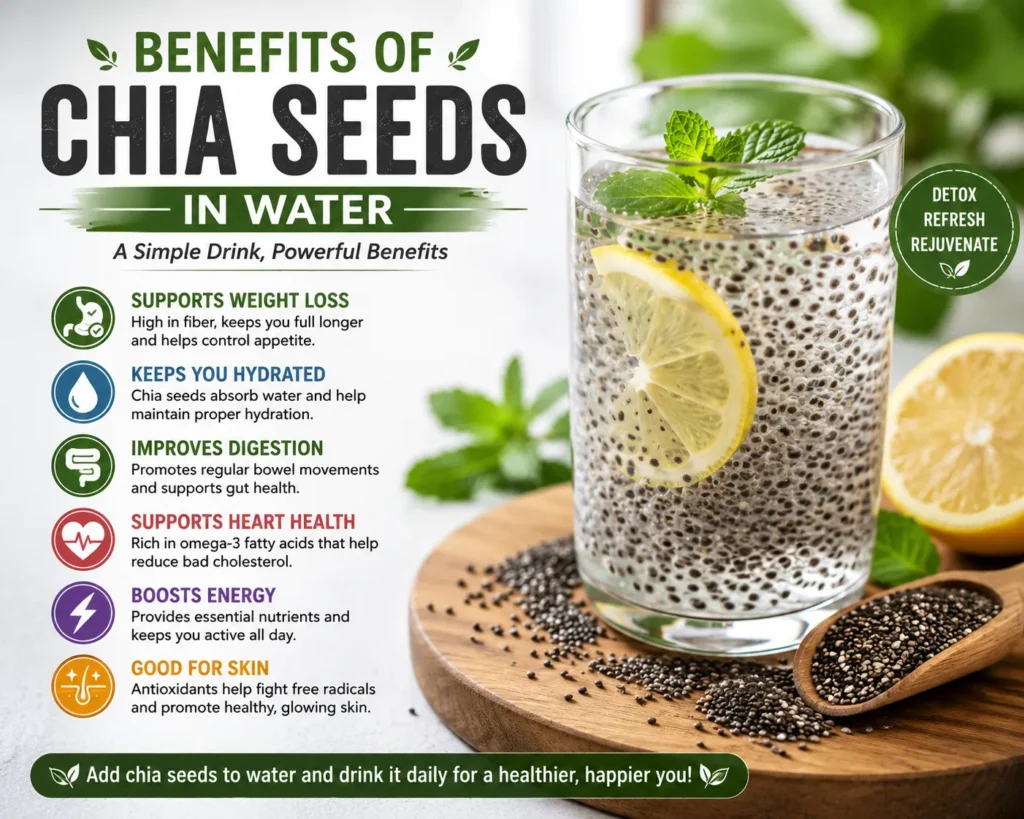
Drinking chia seeds soaked in water is a simple and popular way to enjoy their health benefits. When soaked, chia seeds absorb water and form a gel-like texture that makes them easier to digest.
1. Promotes Hydration
Chia seeds can absorb many times their weight in water, helping the body stay hydrated throughout the day.
2. Supports Weight Loss
The soluble fiber in chia seeds expands when soaked, helping you feel full for longer and reducing unnecessary snacking between meals.
3. Improves Digestion
Soaked chia seeds contain a high amount of dietary fiber, which supports healthy digestion and promotes regular bowel movements.
4. Provides Long-Lasting Energy
The combination of fiber, protein, and healthy fats helps provide steady energy levels without causing sudden spikes and crashes.
5. Supports Heart Health
Chia seeds are rich in omega-3 fatty acids, which may help support healthy cholesterol levels and overall cardiovascular health.
6. Helps Control Blood Sugar Levels
The gel formed by soaked chia seeds may slow down digestion and help maintain more stable blood sugar levels after meals.
How to Prepare Chia Seeds Water
- Add 1–2 tablespoons of chia seeds to a glass of water.
- Stir well and let them soak for 20–30 minutes.
- Add lemon juice or fresh fruit for extra flavor if desired.
- Drink as part of a balanced diet.
For best results, consume chia seeds water in moderation and combine it with healthy eating habits and regular physical activity.
Chia Seeds vs Flax Seeds
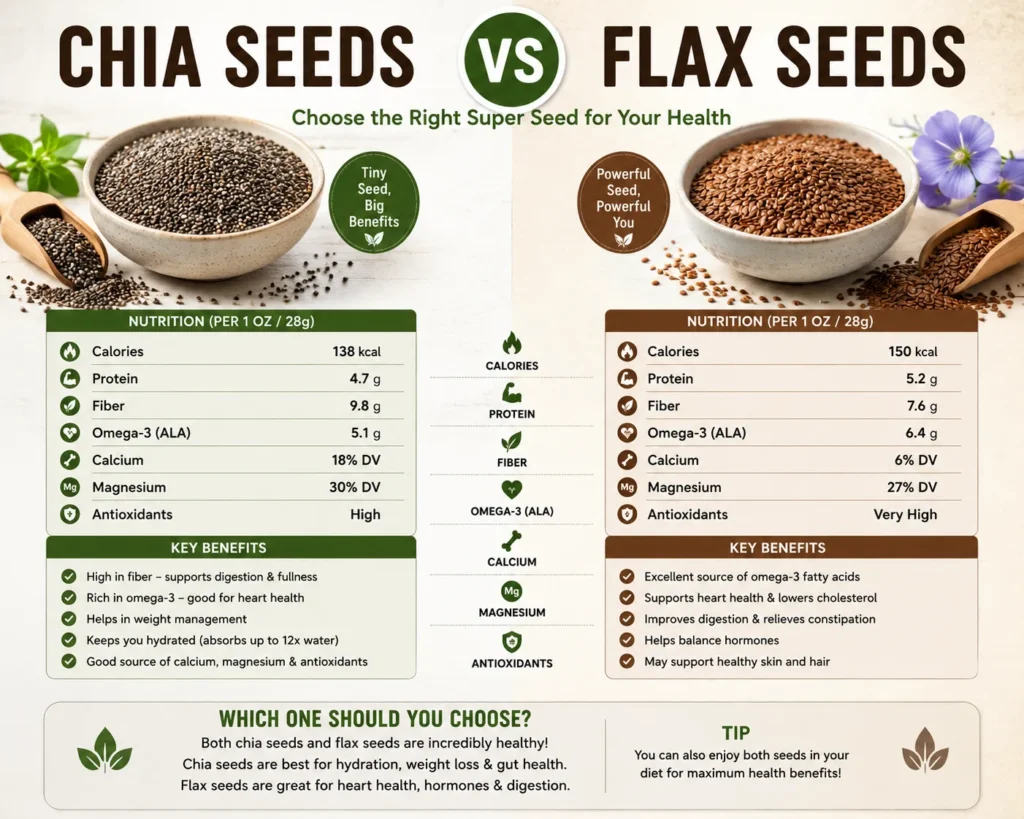
Chia seeds and flax seeds are both highly nutritious superfoods that can be part of a healthy diet. While they share many similarities, they also have some key differences.
| Nutrient | Chia Seeds | Flax Seeds |
|---|---|---|
| Fiber | Very High | High |
| Protein | Higher | Moderate |
| Omega-3 | High | Very High |
| Calcium | Higher | Lower |
| Magnesium | High | High |
| Ease of Use | Can be eaten whole | Best consumed ground |
Benefits of Chia Seeds
- Rich in fiber and protein
- Excellent source of calcium
- Easy to add to water, smoothies, and yogurt
- Forms a gel-like texture when soaked
- Helps promote fullness and hydration
Benefits of Flax Seeds
- Rich in omega-3 fatty acids
- Contains lignans, which have antioxidant properties
- May support heart health
- Often used in baking and smoothies
Which Is Better for Weight Loss?
Both chia seeds and flax seeds can support weight loss because they are rich in fiber and help increase feelings of fullness. However, chia seeds are often preferred because they absorb water and expand, helping control appetite for longer periods.
Final Verdict
There is no clear winner between chia seeds and flax seeds. Both offer impressive health benefits and can be included in a balanced diet. If your goal is better hydration and appetite control, chia seeds may be the better choice. If you want more omega-3 fatty acids and antioxidants, flax seeds are an excellent option.
For maximum nutritional benefits, many people include both chia seeds and flax seeds in their diet.
Best Time to Eat Chia Seeds
One of the most common questions people ask is: What is the best time to eat chia seeds? The good news is that chia seeds can be enjoyed at different times of the day, depending on your health goals.
1. In the Morning
Many people prefer eating chia seeds in the morning. Adding them to water, smoothies, yogurt, or oatmeal can provide fiber, protein, and healthy fats that help keep you full and energized throughout the day.
2. Before Meals
Consuming chia seeds about 20–30 minutes before a meal may help increase feelings of fullness. Their high fiber content absorbs water and expands in the stomach, which can help reduce overeating.
3. Before a Workout
Chia seeds provide a combination of carbohydrates, protein, and healthy fats that can support sustained energy during exercise. A small serving before a workout may help improve endurance.
4. As an Afternoon Snack
Adding chia seeds to yogurt or a smoothie can help curb hunger between meals and prevent unhealthy snacking.
5. Before Bed
Some people enjoy chia pudding or chia seeds mixed with milk in the evening. The protein and fiber may help promote satiety and support overnight recovery.
Best Time for Weight Loss
If your goal is weight loss, the best time to consume chia seeds is often in the morning or before meals. This may help reduce hunger, control calorie intake, and keep you feeling satisfied for longer.
Final Thoughts
There is no single perfect time to eat chia seeds. Whether you enjoy them in the morning, before meals, or as a healthy snack, the key is to consume them regularly as part of a balanced diet and healthy lifestyle.
Who Should Avoid Chia Seeds
Chia seeds are generally safe and nutritious for most people. However, certain individuals should consume them with caution or consult a healthcare professional before adding them to their diet.
1. People with Seed Allergies
Although rare, some individuals may experience allergic reactions to chia seeds. Symptoms can include itching, skin rashes, swelling, or difficulty breathing.
2. People with Digestive Issues
Chia seeds are extremely high in fiber. Eating large amounts suddenly may cause bloating, gas, stomach discomfort, or digestive upset, especially for people who are not used to high-fiber foods.
3. Individuals with Swallowing Difficulties
Dry chia seeds can absorb liquid and expand quickly. People who have difficulty swallowing should avoid consuming dry chia seeds and should always soak them before eating.
4. People Taking Blood-Thinning Medications
Chia seeds contain omega-3 fatty acids, which may have mild blood-thinning effects. Individuals taking blood-thinning medications should consult their healthcare provider before consuming large amounts.
5. People with Low Blood Pressure
Some studies suggest that chia seeds may help support healthy blood pressure levels. People with naturally low blood pressure or those taking blood pressure medications should monitor their intake and seek medical advice if needed.
6. Individuals Taking Diabetes Medications
Because chia seeds may help regulate blood sugar levels, people taking diabetes medications should monitor their blood sugar carefully and consult a healthcare professional before significantly increasing their intake.
Final Thoughts
For most healthy adults, chia seeds can be a safe and beneficial addition to a balanced diet. However, people with allergies, digestive concerns, swallowing difficulties, or certain medical conditions should consume them carefully and seek professional advice when necessary.
How to Eat Chia Seeds
Add to smoothies
Mix with yogurt
Sprinkle over oatmeal
Add to salads
Make chia pudding
Soak in water and drink
Chia seed nutrition data
Whole grains, seeds, healthy fats information
Fiber and heart health information
Side Effects of Chia Seeds
Although generally safe, consuming excessive amounts may cause:
- Bloating
- Gas
- Digestive discomfort
It is best to increase intake gradually and drink plenty of water.
Frequently Asked Questions:
1. Can I eat chia seeds every day?
Yes, moderate daily consumption is generally considered safe for most people.
2. How much chia seeds should I eat daily?
Around 1–2 tablespoons per day is commonly recommended.
3. Are chia seeds good for weight loss?
Yes, their high fiber content may help promote fullness and reduce overeating.
Conclusion
Chia seeds are a nutrient-dense superfood that offers numerous health benefits. From supporting digestion and heart health to helping with weight loss, these tiny seeds can make a valuable addition to a healthy lifestyle. Adding chia seeds to your daily diet is a simple way to boost your nutrient intake and support overall wellness.
Read More Article: 1. 10 Best High Fiber Food
2. 15 High Protein Breakfast Ideas